
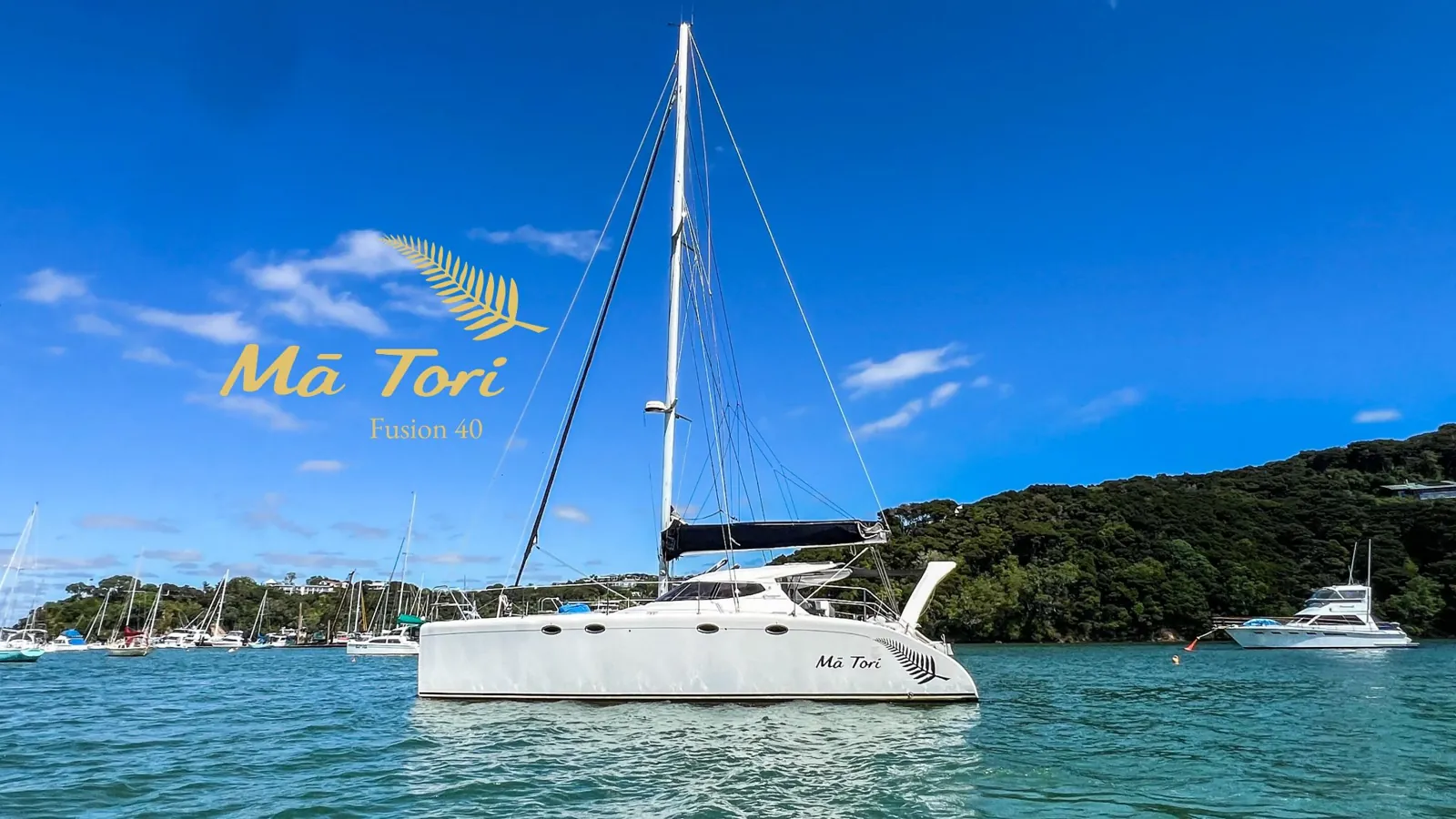
Buying a used cruising catamaran goes in six steps: work out what kind of boat you are actually buying, shortlist two or three types, decide which country to buy in, run a survey that gets into the bulkheads and the saildrives, sort the certificates and the tax, then plan the first season. This page is the map. Each step links the guide that goes through it properly and the official source behind it. We are the crew of a Fusion 40 that is for sale, so read the whole thing with that in mind.
Step 1: work out what you are buying
Most people start with a model and end up with eleven tabs open. Start with the use instead: a couple doing a season a year between New Zealand and the islands needs a different boat from a family living aboard full time, and both need a different boat from the one that looks best in the brochure. Our guide to the four things that stop people leaving has the test for whether the boat is really your blocker, and it is worth ten minutes before you spend ten months on listings.
Then settle the big fork. Production cats from Lagoon, Leopard, Fountaine Pajot and Bali are built to a known standard in large numbers, and the used market is full of ex-charter examples. Owner-completed boats from kits, the Fusion 40 among them, vary with who built them, which is the whole subject of owner-built versus production catamarans. Neither is better. One is predictable and the other is judged boat by boat, with a surveyor.
On money, the best cruising catamarans under $500k is the shortlist we would hand a friend, and the market context is in our September 2026 round-up: a US brokerage report on the second quarter of 2026 put 58 catamaran sales at a median of US$335,000 against a median asking price of US$459,500, with a median 197 days on the market. Sellers with a real boat and a real price are negotiating. Boats that have sat for a year are surveyed twice as hard, not bought cheaper on sight.
Step 2: shortlist with the head to heads
Once the type is settled, the shortlist is two or three boats, not eleven. The Fusion 40 review is the honest version of what a 40 foot owner-completed cat is and is not. The comparisons put it against the boats most buyers are weighing at the same time: the Lagoon 42, the Leopard 40, the Fountaine Pajot Isla 40, the Bali Catsmart, and for an Australian buyer the Seawind, Schionning and Lightwave shortlist. Each one says what the other boat does better, because a comparison that only flatters our boat would not be worth reading.
Step 3: decide where to buy
Where the boat sits changes the price, the tax and what you can trust about her history. The case for New Zealand is in buying a catamaran in New Zealand, and it rests on three things. The refit yards at Whangarei and Opua work on offshore boats all year round. An NZ-based boat that has left on international voyages has been inspected against a published offshore standard, Yachting New Zealand's Cat 1, and since 1 July 2024 the Maritime NZ International Voyage Certificate for cruising yachts. And GST usually does not land on an exported boat: Inland Revenue's page on zero-rated supplies gives a boat leaving under its own power 60 days from the buyer taking possession, with the export paperwork to match. Confirm the specifics with an NZ marine accountant before you structure a deal; the page is a signpost, not advice.
Buying from the United States brings its own line item. Our guide to US boat import tariffs goes through what a foreign-built boat costs to bring home and why country of build matters more than flag. Buying in Australia puts you closer to the Whitsundays and a shorter run to the islands, and the Australian-built cats in the Seawind, Schionning and Lightwave comparison are mostly found there.
Step 4: the survey, and what it has to find
A catamaran survey is not a monohull survey with two of everything. The catamaran survey checklist lists the six things we would make sure the surveyor got into: the bulkheads and the structure between the hulls, the chainplates and standing rigging, the saildrive diaphragms, wet core in the decks, the electrics and lithium, and the invoices that date each one. Two numbers from that guide to carry in your head: Yanmar's SD series manual puts the saildrive diaphragm at seven years, and Practical Sailor puts wire standing rigging at eight to ten years, sooner with offshore miles. No invoice, assume original.
Pick the surveyor before you pick the boat. The International Institute of Marine Surveying's guide to choosing a marine surveyor says to find someone with experience of the type, confirm their professional indemnity cover is current and get more than one quote. On a cat, ask how many cored composite multihulls they have surveyed. The rig above deck level, the engines and the gas are often outside the surveyor's scope, so book a rigger and a mechanic for the same haul-out.
The printable versions, the pre-survey walk-through, the survey-day list, the sea trial and the questions for the seller, are in the Catamaran Buyer's Pack, USD $39. The free guide tells you what matters; the pack is the clipboard.
Step 5: certificates, registration and insurance
If the boat is in New Zealand and you plan to leave on her, read the NZ Cat 1 inspection checklist before settlement, not after. It goes through what the inspector covers, and a boat with a current certificate has already been through it. You do not need the certificate to buy the boat or to sail in; Yachting New Zealand's taking your boat overseas page sets out who needs what. You will need your own if you later leave New Zealand on your own bottom.
Registration follows your flag and your plans, and NZ sellers and brokers are used to deregistration and export paperwork. Insurance deserves the earliest phone call of the lot: offshore cover for catamarans has tightened, insurers commonly want a recent out-of-water survey, and most policies draw a cyclone-season box with a date on it. Read the wording before the offer, because it will decide where the boat spends November to April, and the options are in the South Pacific cyclone season plan.
Step 6: the first season
The buying is the short part. The Fiji to New Zealand passage guide covers the run most Pacific boats make every spring, and the October 2026 passage report is how one of ours went. If you will be working from the boat, working remotely from a catamaran in the Pacific and the three Starlink guides it links cover the connection and the power budget. The sailing and cruising events calendar has the rally windows and the boat shows for the year ahead, and if you want to stand a watch on this passage before you commit to a boat of your own, we take crew on the NZ to Fiji crossings.
What we don't know
- We are sailors selling a boat, not brokers, surveyors or tax advisers. Every number above comes from the guide and the source linked next to it, and the professional on the boat or across the desk outranks all of it.
- What a survey, a haul-out or a delivery costs where you are. We have not collected quotes.
- Whether the US tariff position or the NZ GST rules will be the same when you read this. Check the official page, not ours, for the current wording.
Rules, tariffs, certificate names and insurer requirements change. Check the current official source, the Maritime NZ, Inland Revenue and Yachting New Zealand pages linked above, before you rely on anything here.
Questions people ask about buying a used catamaran
What is the first step in buying a used catamaran?
Decide what the boat is for and what you can afford to leave on, then shortlist two or three types. A written budget and a specification that has stayed still for a few months is the sign you are ready to view boats.
Is New Zealand a good place to buy a cruising catamaran?
Yes for an offshore buyer. NZ-based boats that have left on international voyages have been inspected against a published offshore standard, the refit yards at Whangarei and Opua work on offshore boats all year, and Inland Revenue zero-rates a boat exported within the rules, with 60 days to leave under its own power.
What does a catamaran survey need to find?
The bulkheads and the structure between the hulls, the chainplates and standing rigging, the saildrive diaphragms, wet core in the decks, the electrics and lithium, and the paperwork that dates each one. The rig above deck level, the engines and the gas are often outside the scope, so book a rigger and a mechanic as well.
Do I need Cat 1 to buy a boat in New Zealand?
No. The certificate is for NZ-based boats leaving on an international voyage, not for buying one or sailing in. A boat that holds it has been independently inspected against the offshore standard, and you will need your own certificate if you later leave New Zealand on your own bottom.
Keep reading: the detailed steps are in buying a catamaran in New Zealand and the catamaran survey checklist, the shortlist is in best cruising catamarans under $500k, and our bluewater catamaran for sale is the boat this was written from.