
Walk any dock in Denarau or Musket Cove right now and you'll hear the same conversation on repeat. When are you going south? Who are you routing with? Have you seen the long-range yet? It happens every September, because the entire South Pacific cruising fleet is facing the same deadline at the same time — and the passage from Fiji to New Zealand has a reputation that makes people nervous.
Some of that reputation is earned. This is not the trade-wind sleigh ride that brought you north in May. It's a crossing out of the tropics and into the mid-latitudes, where the weather stops being reliable and starts having opinions. But it's also a passage that a well-prepared cruising boat makes safely every single season, and we've now done it four times in a row on our own 40-foot catamaran. Here's what we've learned about timing it, sailing it, and arriving without drama.
The deadline that sets everything else
The official South Pacific cyclone season runs from 1 November to 30 April. That single fact drives the whole fleet's calendar. Tropical cyclones don't read calendars, and both early and late systems happen — but 1 November is the date insurers, marinas and prudent skippers plan around.
Which is where the second deadline comes in, and it's the one people underestimate: your insurance policy. Most cruising policies define a geographic box and a date — commonly requiring the vessel to be south of a nominated latitude, or inside a named safe area, by a nominated day. Sail outside those terms and you may simply not be covered. Policies vary enormously between insurers and vessels, so read yours now rather than in late October, and if the wording is ambiguous, get the answer in writing.
Put the two together and you get the window everyone is aiming at: mid-October to mid-November. Go much earlier and you're more likely to meet a deep winter low in the Tasman. Go much later and you're pushing into cyclone season with a boat still in the tropics.
Why you wait for a pattern, not a date
Here's the thing that catches first-timers: you don't pick a departure day, you pick a departure pattern. The window matters less than what the weather is actually doing when it opens.
The problem is geography. You start in the reliable south-east trades, and somewhere around 25–30°S you cross into the zone where mid-latitude fronts and troughs march east across the Tasman. Those two systems don't blend politely. Where a trough meets the trades you can get a compression — the "squash zone" — that turns a benign forecast into a hard, wet, upwind slog. That convergence, not the tropics and not the New Zealand coast, is the part of this passage worth respecting.
So the classic strategy is to leave on the back of a high moving east, timing your run south to cross the trough zone while it's weak or after a front has passed through. In practice that means watching the long-range models for a week or more, then committing when the pattern lines up — even if that means going on a Tuesday when you'd planned Friday, or sitting for another ten days when everyone else has left.
Every season a few boats leave because their crew's flights are booked rather than because the weather is right. Don't be that boat. The single best decision we've made on this passage, repeatedly, has been to wait.
Weather routing: what we actually use
We run PredictWind aboard and have done for years — the offshore app, the departure planning tool, and the tracking page that also feeds our position onto this website. It's not the only good option, but it's the one most of the fleet is using, which has an underrated benefit: when everyone's looking at the same models, dock conversations become genuinely useful.
Two habits matter more than which app you choose. First, look at multiple models and treat disagreement as information — when the models diverge badly beyond day four, that's not noise to average out, it's a warning that the pattern is unstable. Second, consider paying a professional router for this particular passage. A good router costs a few hundred dollars, watches your boat specifically, and has seen a thousand crossings. For a once-a-year passage with this much variability, plenty of experienced crews consider it the cheapest insurance they buy.
If you're relying on satellite comms to get forecasts underway — and you should have a way to do that — it's worth reading our notes on what changed with Starlink for cruisers this year, because several boats got caught out mid-season assuming their plan still worked offshore.
Where to stage, and checking out
Most boats stage from the west of Fiji — Port Denarau, Vuda or the Mamanucas — because it shortens the leg and puts you closer to the pattern you're waiting for. Savusavu and the eastern islands are lovely but add miles at the wrong end of the season.
Clear out with Customs, Immigration and Biosecurity at an official port of entry, and pay attention to the timing rules: you're generally expected to depart soon after clearing, and if your window collapses after you've checked out, you'll need to sort that out with the authorities rather than simply waiting at anchor. It's routine, but do it politely and early rather than assuming.
Clean your hull before you go. We'll come back to why in the arrival section, but it's much easier and cheaper to organise a diver in Fiji than to fail an inspection in Opua.
Minerva Reef: the bolt hole in the middle
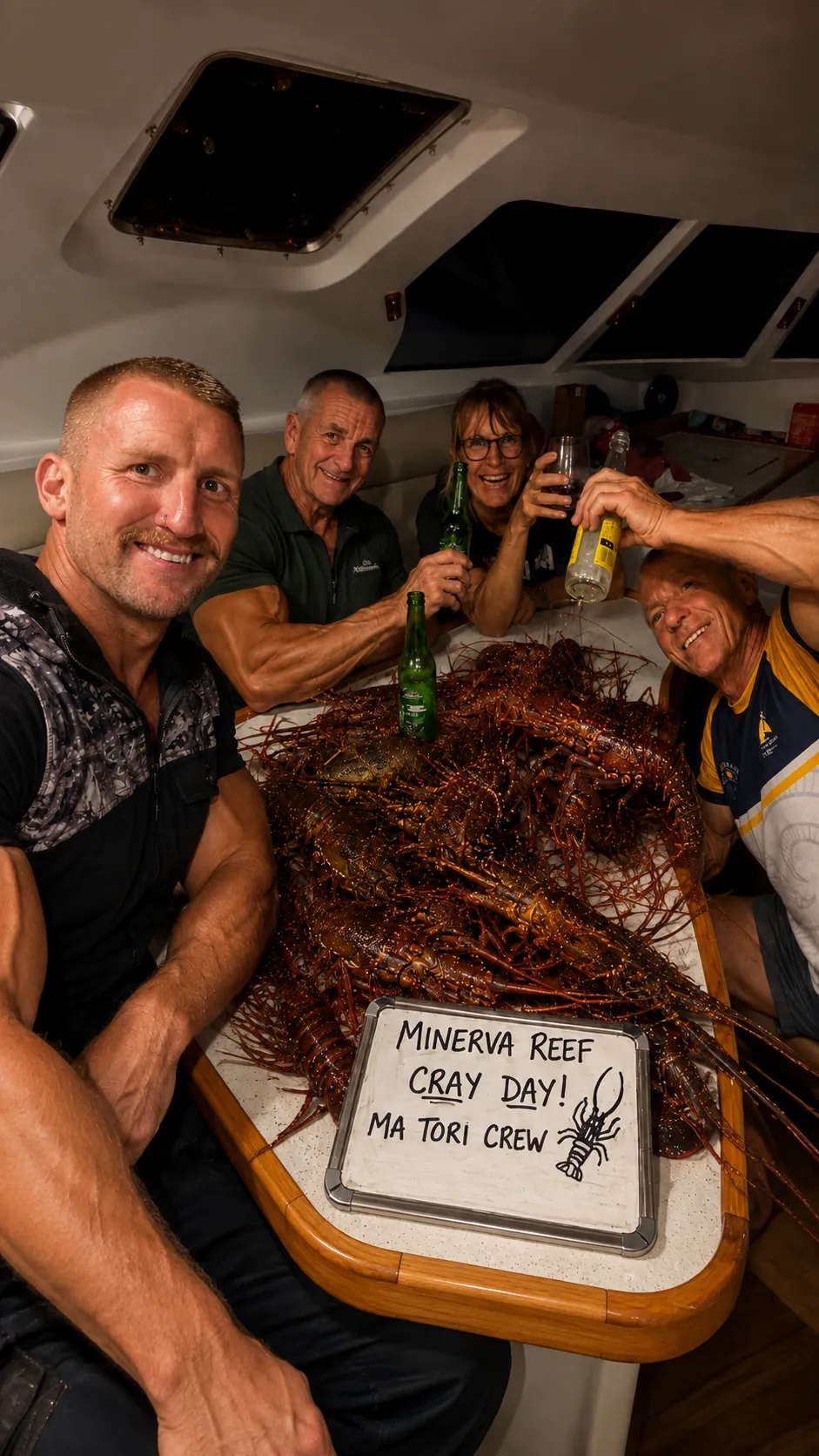
Roughly two-thirds of the way down sits North Minerva Reef — a ring of coral in open ocean with an anchorage inside it and nothing else for hundreds of miles. It's one of the strangest and best places we've ever anchored: flat water, no land in sight, and on our 2024 crossing, a crayfish dinner for the whole crew.
Practically, Minerva is a re-timing tool. If the forecast for the second half of the passage sours, you can duck in, rest the crew, and wait for the next window rather than pressing on into it. Be clear-eyed about its limits though: the reef knocks down swell but offers no protection from a serious system, there are no services, no fuel and no help, and the entrance needs decent light and settled conditions. It's a waypoint, not a refuge.
What the passage is actually like
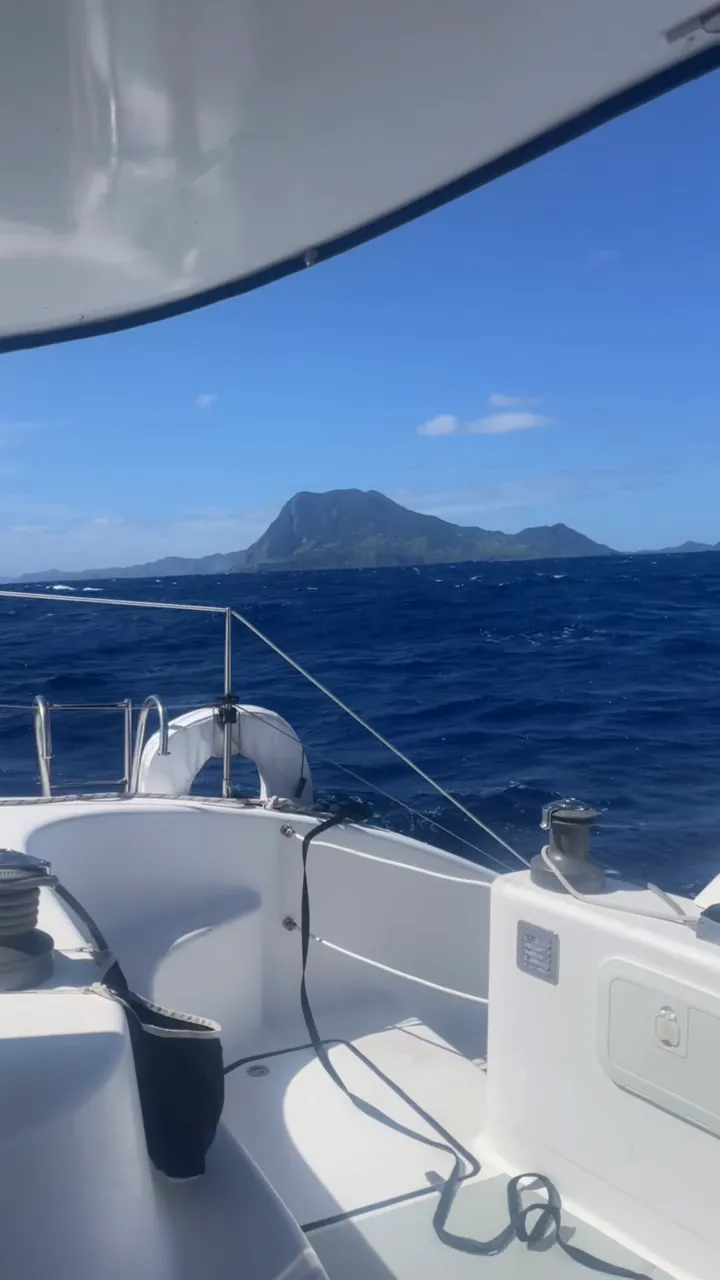
About 1,100 nautical miles, typically seven to ten days. The pattern we've experienced most often goes something like this: two or three days of lovely trade-wind sailing out of the tropics, a middle section that gets progressively cooler, greyer and more variable, then a final approach where you're watching a front and trying to arrive on the right side of it.
Things worth knowing that don't show up in the pilot books: it gets genuinely cold at the southern end and crews who packed for Fiji suffer for it. Fishing is excellent for the first half and stops being the priority in the second. The boat will do more miles under autopilot than under hand, so make sure yours is bulletproof before you leave. And the fleet talks — daily radio nets and WhatsApp groups mean you're rarely as alone out there as the chart suggests, which is both reassuring and, when someone else's forecast differs from yours, occasionally maddening.
You can follow our own crossings on the live tracker and Captain's Log, which updates straight from the boat — including the fourth passage we completed this August.
Arriving in New Zealand: the paperwork
This part is genuinely straightforward if you do it in the right order, and genuinely stressful if you don't.
| Step | What's required | When |
|---|---|---|
| Advance Notice of Arrival | ANOA form emailed to yachts@customs.govt.nz, with vessel registration, passport bio-pages for all aboard, a photo of the vessel and evidence of value | At least 48 hours before entering NZ territorial waters (12 nm) — most people send it before leaving Fiji |
| Biosecurity pre-notification | Triggered by the ANOA; MPI will come back to you with what they need | Before departure, ideally |
| Arrival port | Clear in at a designated port of entry — Opua is the main one for boats coming from the islands, with Customs and MPI on site | On arrival, at the quarantine dock |
| Hull inspection | Evidence of biofouling management and a clean hull | On arrival |
The biofouling piece deserves emphasis because it has tightened. Since mid-2025, inspections have become considerably more thorough — underwater camera footage with lights rather than a glance over the topsides — and boats have been directed to clean or, in bad cases, to leave. A hull cleaned in Fiji a week before departure, with a receipt to show for it, turns this from a risk into a formality.
One point that confuses people every year: New Zealand's Category 1 inspection applies to NZ-based boats departing on an international voyage, not to foreign yachts arriving. You don't need Cat 1 to sail into New Zealand. You'll need it if you later leave from New Zealand on your own bottom — and it's worth knowing that a boat which has held Cat 1 across multiple seasons has been independently inspected against a published offshore standard more than once, which is a genuine data point when you're buying a boat here.
If it's your first time
Three things we'd tell anyone making this crossing for the first time. Prepare the boat for upwind work, even though you're hoping for reaching — check the rig, the reefing system, the storm sail arrangements and everything that will get loaded if you end up hard on the wind for 36 hours. Our own reefing guide exists because we wanted those decisions made in advance rather than at 2am. Carry more crew than you think you need, because a three-person watch system is transformative compared to two-up on a ten-day passage. And set the expectation that you'll wait — tell your family the arrival date is a range, not a date, and the pressure to leave on a bad forecast disappears.
Do that, and the passage south stops being the thing you dread at the end of the season and becomes what it should be: the last great sail of the year, and the one you'll talk about all summer.
Keep reading: the companion piece to this one is where the fleet goes for cyclone season — the decision behind the decision. If you're weighing a boat capable of this run, our catamarans under $500k guide and the New Zealand buyer's guide are the places to start. Or see the boat that's done it four times.
Keep reading: the difference between choosing a season and choosing a Tuesday is the subject of climatology is not a forecast; where the fleet goes afterwards is in the cyclone-season plan; and if you would rather stand a watch on this passage than read about it, we take crew — sail the Fiji to New Zealand passage with us. Then work out the rota with the watch builder.