
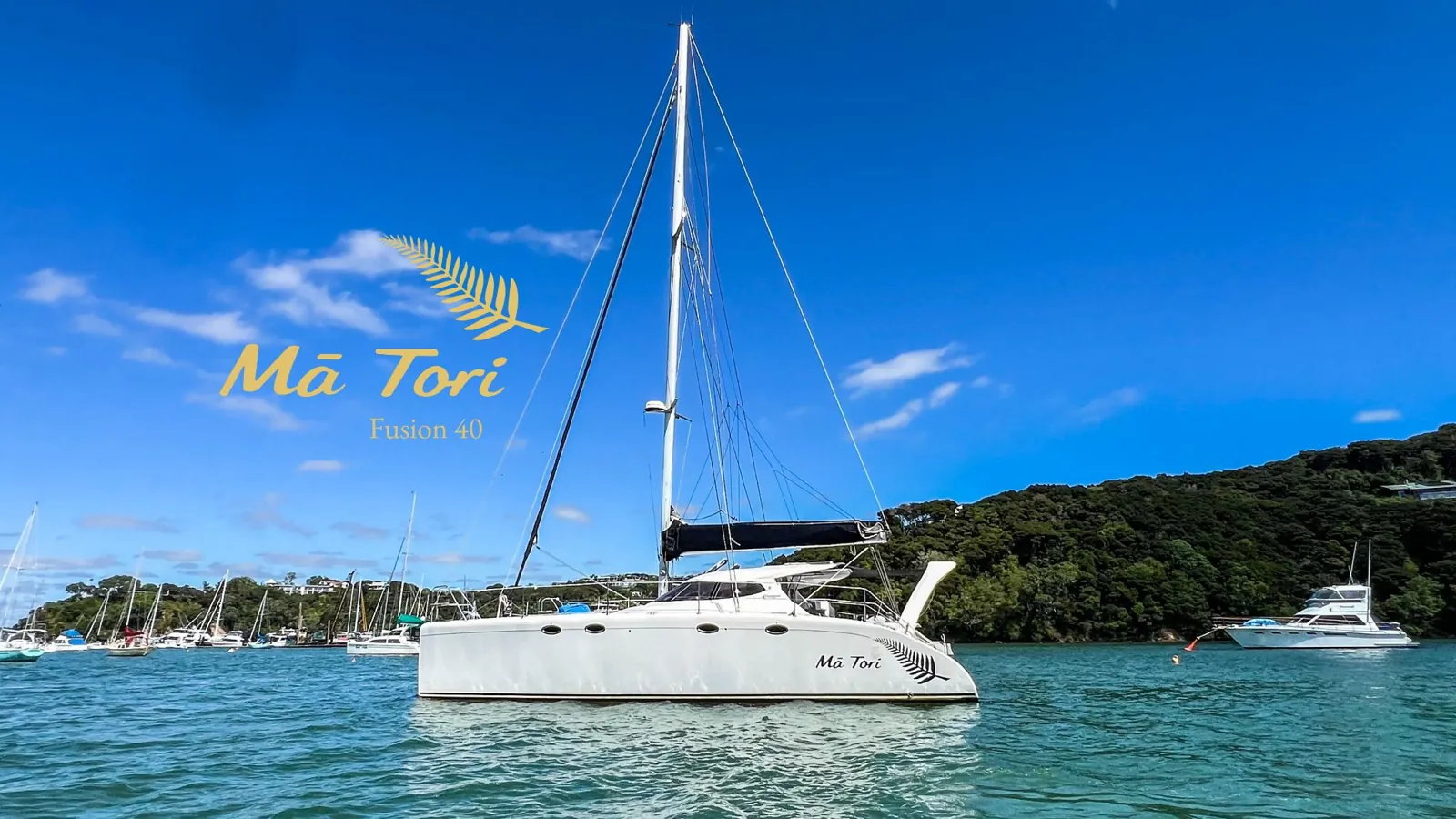
If you're searching "catamaran for sale New Zealand" from the US or Europe, you've probably already noticed the pattern: NZ boats tend to be well-equipped, honestly described, and priced in a currency that works in your favour. That's not marketing — it's the product of a small country with an outsized marine industry and an offshore sailing culture that keeps boats genuinely ready for sea. We're Kiwi owners selling our own catamaran, so we have skin in this game, but everything below applies whether you buy our boat or someone else's. Buying a yacht in New Zealand from overseas is far more straightforward than most people expect — and if you've been scanning every catamaran for sale, Australia and the islands included, the process below applies almost unchanged.
Why New Zealand is a great place to buy a cruising boat
New Zealand builds, refits and provisions a large share of the South Pacific cruising fleet. Every year, hundreds of yachts arrive from the tropics to sit out cyclone season, and Northland's yards — Whangarei and Opua in particular — have built world-class refit capability serving them: riggers, sailmakers, electricians, engineers and composite specialists who work on serious offshore boats all year round. Boats that live here get maintained here, to a high standard, at labour rates that are typically reasonable by US and European standards.
Two more factors work in your favour. First, the survey culture is straightforward: NZ marine surveyors work in a small community with reputations to protect, and reports tend to be blunt rather than diplomatic. Second, the exchange rate. The New Zealand dollar has generally been weak against the US dollar and euro in recent years, which means an NZD price tag converts to noticeably less in your home currency — a genuine structural discount for USD and EUR buyers.
And then there's Cat 1 — which deserves its own section.
NZ Cat 1: the certification that de-risks a purchase
New Zealand law requires every NZ-based yacht departing on an international voyage to pass a Category 1 (Cat 1) safety inspection. It's a genuine, in-person inspection by an authorised Yachting New Zealand inspector covering hull integrity, rig, steering, bilge systems, ground tackle, liferaft and safety equipment, communications, storm sails and more — and it must be current for the vessel to be cleared outwards.
For a buyer, this is gold. A boat holding current Cat 1 hasn't just been described as offshore-ready by a seller — it has been independently inspected as offshore-capable against a published standard. A boat that has held Cat 1 across multiple seasons has been re-inspected repeatedly. It doesn't replace your own survey, but it dramatically narrows the gap between what's claimed and what's true.
The buying process, step by step
Buying in NZ works much like buying anywhere in the English-speaking world, with a few local flavours. Here's the typical sequence:
| Step | What happens | Notes for overseas buyers |
|---|---|---|
| 1. Shortlist & view | Video walkthroughs, then in-person or proxy viewing | NZ sellers are used to remote buyers; live video tours are normal |
| 2. Offer | Written offer, usually conditional on survey and sea trial | Via broker or directly in a private sale; agree deposit terms in writing |
| 3. Survey | Independent marine survey, haul-out included | Choose your own surveyor; NZ reports are typically frank |
| 4. Sea trial | Sail the boat, test all systems under way | Can be delegated to a surveyor or trusted skipper if you can't attend |
| 5. Settlement | Funds transfer against bill of sale and title documents | Brokers hold deposits in trust; for private sales consider an escrow service or NZ lawyer |
| 6. Registration & insurance | Register under your chosen flag; insurer may require its own survey | Start insurance conversations early — offshore cover takes time |
| 7. Departure prep | Cat 1 inspection (if sailing away), provisioning, customs clearance | Allow several weeks; Northland yards make this easy |
Broker versus private sale is mostly a question of comfort. Brokers add a layer of process — trust accounts for deposits, standard sale agreements, experience with export paperwork. Private sales (like ours) remove the commission from the equation, which usually means a sharper price, and a good NZ maritime lawyer or escrow arrangement covers the trust question for a modest fixed fee.
GST: the part overseas buyers most often get wrong (in their favour)
New Zealand charges 15% GST on most goods sold within the country. But GST is a tax on consumption in New Zealand — and a yacht being exported by an overseas buyer is not consumed in New Zealand. In broad terms: where a vessel is sold to an overseas buyer and exported within the required timeframe, the sale can potentially be zero-rated for GST, or a refund mechanism may apply, depending on the seller's GST status and how the transaction is structured. Private sales between individuals are typically outside the GST net altogether.
The rules have real conditions attached — timeframes, evidence of export, who holds GST registration — so treat this paragraph as a signpost, not advice: confirm the specifics with a NZ marine accountant or maritime lawyer before you structure the deal. The point is simply that overseas buyers shouldn't assume 15% sits on top of the price. Often it doesn't.
Getting the boat home (or not going "home" at all)
You have three broad options, and one of them is the whole reason to buy in NZ:
Sail her into the Pacific. The classic route: depart Northland in the May–July weather windows for Fiji or Tonga, cruise the islands through the southern winter, and carry on west toward Australia or Southeast Asia, or north toward Hawaii, or back to NZ for cyclone season. Buying in NZ in the NZ winter (June–August) puts you at the start line of the Pacific season, not the end of it.
Ship her. Yacht transport services run from NZ and Australia to the Mediterranean, the US and elsewhere. It's not cheap — budget a meaningful fraction of the boat's value for a 40-foot catamaran, and note that wide multihulls cost more than monohulls to ship — but it's routine and insurable.
Deliver on her own bottom with crew. Professional delivery skippers are plentiful in NZ, and a Cat 1-certified boat is precisely what they want under their feet.
Buying from overseas without wasting airfares
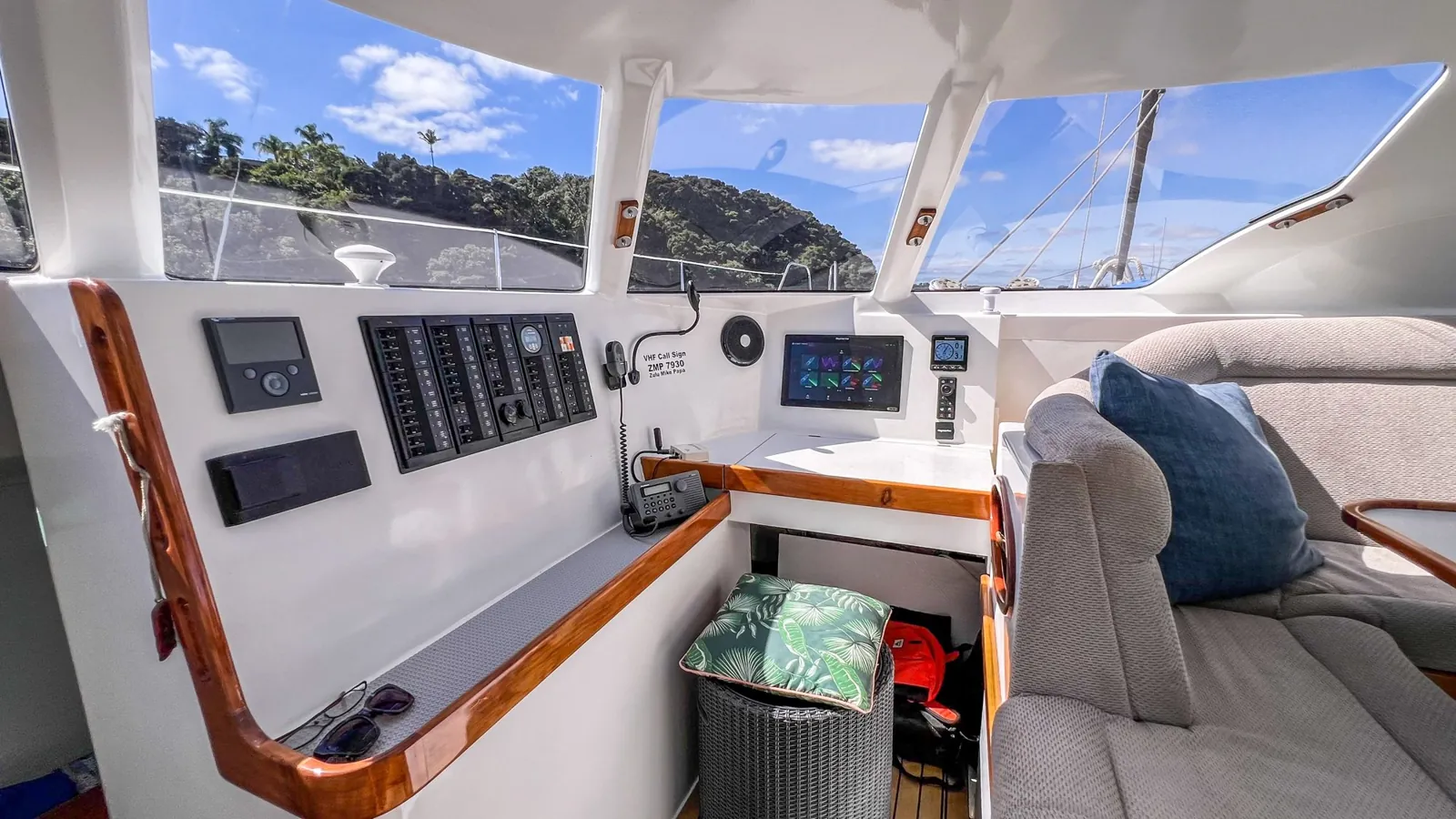
A sensible remote process looks like this: start with a detailed live video walkthrough (any serious NZ seller will oblige, and the time zones work fine for US and European evenings); ask for the maintenance file, refit invoices and Cat 1 history; commission an independent NZ surveyor — they act for you, not the seller — and have them attend a sea trial; then fly in once, for the final inspection and handover, when the deal is already substantially de-risked. Plenty of NZ boats sell to overseas buyers who first stepped aboard a week before settlement.
Paperwork: registration and insurance
Once you own the boat you'll register her under your chosen flag — your home country, or a registry that suits your cruising plans. NZ sellers are accustomed to deregistration and export paperwork, and a broker or maritime lawyer can run the process end to end. Insurance deserves early attention: offshore cruising cover for catamarans has tightened worldwide, insurers commonly require a recent out-of-water survey (your purchase survey usually serves), and some will want crew experience details for passage cover. A boat with current Cat 1 and a documented refit history is a materially easier boat to insure — one more way certification culture works in the buyer's favour.
Timing: the NZ winter is your friend
The elegant quirk of buying in New Zealand is that the seasons conspire to help you. NZ's winter — June through August — is when the local sailing season is quietest and sellers are most motivated, and it's exactly when the tropical Pacific season is in full swing. Buy in the NZ winter and you can be swinging at anchor in Fiji within weeks of settlement, with the whole season ahead of you. Buy in the NZ summer instead and you get glorious Bay of Islands cruising while you prepare, then a May departure window. There is no bad time; there's just a particularly good one, and it's roughly now.
The short version
New Zealand offers overseas catamaran buyers a rare combination: honest survey culture, world-class refit infrastructure in Whangarei and Opua, an offshore certification regime that independently verifies seaworthiness, a favourable exchange rate, and a departure lounge pointed straight at the South Pacific. Do your due diligence like you would anywhere — survey, sea trial, proper settlement mechanics, professional GST advice — and you can buy better boat per dollar here than almost anywhere else, then start your cruising life in some of the best waters on earth.
Keep reading: see what a proven NZ offshore boat looks like in our Fusion 40 review, survey the market in best cruising catamarans under $500k, or weigh build philosophies in owner-built vs production catamarans. And if you'd like to put this guide into practice, Mā Tori is for sale now. Buying from the United States? Check US boat import tariffs before you plan the delivery, and Starlink’s new rules for cruisers before you plan the office. Before any of that, it is worth knowing what actually stops people leaving — the boat is rarely the real one.