
Mid-September in the South Pacific has a particular feel. Musket Cove is chocka, the WhatsApp groups have switched from "which anchorage" to "which weather model", and everyone with a boat in Fiji is quietly doing the sums on when to head south. This year there's more than usual to talk about. The strongest El Niño anyone's measured is building under the season, two governments are fining boats that get the paperwork wrong, Starlink has moved the goalposts again, and the boat shows in Europe have just shown us what the next lot of cats look like. Here's the lot, in one place, with what we reckon it means for a boat like ours.
Dates, prices and rules below are as we understand them on 15 September 2026. The official sources are named; check them before you act on any of it, especially the clearance rules and the cyclone outlook.
1. The El Niño under this season is the biggest on record, and the outlook isn't out yet
New Zealand's national forecaster has now formally declared El Niño, and the numbers behind it are not subtle. In the August Island Climate Update the central Pacific sea temperature index sat at 2.48°C above normal, well into "strong" territory, and the July Southern Oscillation Index came in at minus 3.6, the most negative reading since the record began in 1876. Their words, not ours: this is expected to be one of the strongest El Niños on record, if not the strongest, and it's forecast to peak over the coming summer.
What that means for a cruiser, in the order it'll hit you:
- Water, right now. The August to October outlook has Fiji, Vanuatu and New Caledonia drier than normal, with a high chance of "extremely dry", meaning under a quarter of normal rainfall. If you've been topping the tanks off the bimini, that's going to get harder. Fill up where there's town water, and don't be shy about the watermaker hours.
- Cyclone season, from November. The official Southwest Pacific tropical cyclone outlook lands around October, and until it does, nobody can tell you the count. What the history says is that El Niño years tend to shift cyclone formation east, which lifts the risk for Tonga, Niue, the Cooks and French Polynesia, and that systems crossing more warm water have more chance of getting nasty. That is emphatically not a "Fiji will be quiet" forecast. Fiji has been hammered in El Niño years before. We wrote the five cyclone-season options up earlier this month; the El Niño headline doesn't change the advice, it just sharpens it.
- The passage south. Here's where we say we don't know. People will tell you El Niño springs bring more westerlies to northern New Zealand and a rougher approach, and there's some climatology behind that. But climatology names the season, not the day. You still pick a pattern, not a date, and you still leave on the back of a high. If you want that argument in full, it's in Climatology is not a forecast, and the passage itself is in Fiji to New Zealand: timing the passage south.
2. Musket Cove, and the fleet thinning out
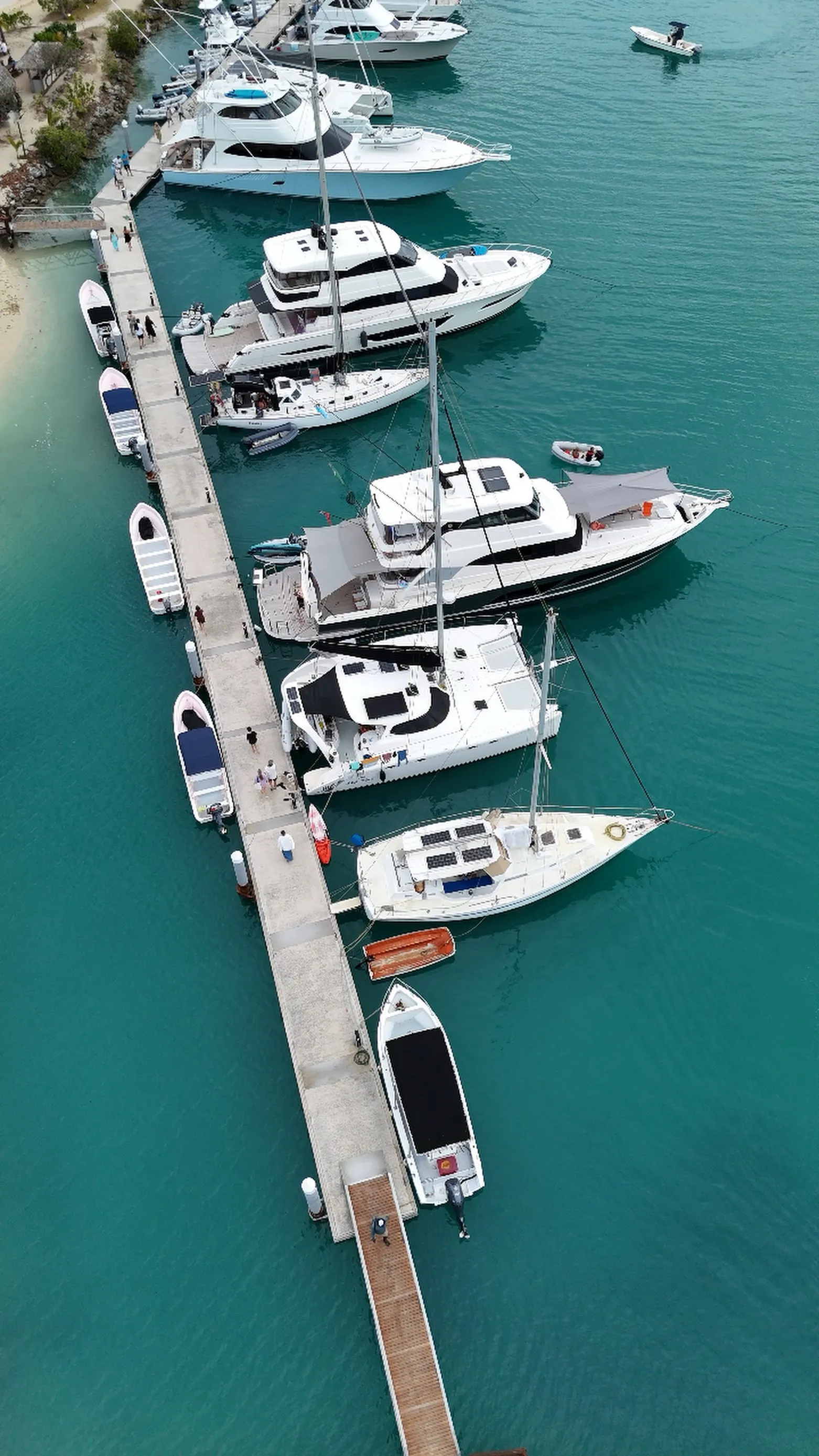
Fiji Regatta Week at Musket Cove runs 15 to 19 September this year. It's the 42nd one, and the resort's 50th birthday, so expect it to be a big one. The sailing is the 20-mile Round Malolo Lailai race and a few fun ones; the point is the week ashore, Pirates' Day, the Rum Run, and every crew you've met since May in one bar. It's the social full stop on the season for a lot of boats.
For scale, the Island Cruising Pacific Rally had close to 190 boats registered when it left New Zealand and Australia in May, and most of those, plus the independents, are somewhere in Fiji, Tonga or Vanuatu right now, working out whether they're going south, west to Australia, or staying put. The marinas and cyclone pits fill from here, and if you haven't booked a berth or a pit for the season, that's the phone call to make this week, not next month.
3. Fiji and Tonga are fining boats that skip the arrival notice
This one has been doing the rounds of the groups and the Ocean Cruising Club put out a notice on it: both Fiji and Tonga are now fining yachts that arrive without a properly lodged Advance Notice of Arrival, and the fines aren't token.
| Country | Notice required | Counted from | What we've seen reported |
|---|---|---|---|
| Fiji | At least 48 hours before arrival | Entering Fijian waters, not the port of entry. Customs logs boats on AIS. | A yacht fined FJ$4,600 for no notice and a stop in the Lau Group, which isn't a port of entry |
| Tonga | At least 24 hours before ETA | Your stated ETA at the port of entry | Fines reported to start at TOP 10,000. In Vava'u, call Customs on VHF 26 outside, 16 inside, and clear at Neiafu before you anchor anywhere |
| New Zealand | At least 48 hours before entering the 12 nm limit | The 12 nm line | The Biosecurity Pre-arrival Report has been compulsory since 1 May 2025, and the hull gets looked at properly |
Fiji in particular has said it now treats a boat that turns up unannounced the way it treats a boat that might be running drugs, and it isn't inclined to hear "we didn't know". The fix is boring: lodge the notice before you leave the last port, screenshot the acknowledgement, and go straight to a port of entry. The Lau Group is beautiful and you can get a permit to cruise it. Not on the way in. New Zealand's version of the paperwork, and the biofouling inspection that goes with it, is in the passage-south guide.
4. Starlink again: a proper cruiser plan, and a price hike on 27 September
Short version, because we've written the long one: Starlink has launched a Personal Maritime plan at US$185 a month with no 30-day international clock, for private boats up to 60 ft, and at the same time is tripling Ocean Mode to US$6 a gigabyte from 27 September. For anyone doing the run south in October, that second bit is the one to budget for. The full breakdown, with the passage maths, is in Starlink Personal Maritime: the US$185 cruiser plan.
5. What the builders showed at Cannes, and what's coming at Annapolis
Cannes ran 8 to 13 September and the cat news was thick on the ground. The ones a cruiser should know about:
- Lagoon 47. Slots between the 46 and the 51, flybridge as standard, a forward cockpit with a door from the saloon, three-, five-cabin and "Smart Room" layouts. Base price quoted in Europe at €680,000 before tax, deliveries from early 2027. This is the boat the charter fleets and the second-boat buyers will be arguing about for the next five years.
- Oyster C60. Oyster's first ever catamaran, 19.4 m, up to a metre of bridgedeck clearance, designed with Berret-Racoupeau. No price yet; the guesses are €1.8 to 2.5 million. Interesting mostly because a monohull house that proud has decided the money is in cats.
- Fountaine Pajot 48, replacing the Tanna 47, alongside a 55 and a 70. Leopard 43, replacing the 42, with a bigger rig and the forward cockpit. Aquila, who build power cats, showing a 45 and a 50 under sail. A new Spanish yard, Simbad, with a 55.
Annapolis follows on 15 to 18 October and the pattern there is the one worth watching: the Balance 502 with hybrid drives, a 36 kWh battery and up to 3,000 W of solar; the Knysna 550 in a "Solar Explorer" version that trades lounge space for panels and systems; and the Vaan R4, all-electric, in mostly recycled aluminium. Every serious new cruising cat is now being drawn with a big battery, a big solar roof and a technical space to fit the next drivetrain into. Our take, from a boat with a pair of Yanmars and a foredeck of panels: the diesels aren't going anywhere for a while, but the boats that hold their value in ten years will be the ones with room to change their minds.
6. The used-cat market is a buyer's market, and we'd know
One US brokerage-site report on the second quarter of 2026 put numbers on what everyone's been feeling. Fifty-eight cats sold in the quarter at a median of US$335,000, against a median asking price across the listings of US$459,500. The boats that did sell went for about 9 per cent under their ask. Median time on the market was 197 days, 14 of the 58 had been listed over a year, and there were around 400 boats sitting on the books against those 58 sales. The busiest slice was 45 to 49 ft, about a third of sales, but 38 to 40 footers were a fifth, and 22 per cent of everything that sold went for under US$200,000. Another broker site called 2026 the best buyer's market for used cruising cats in nearly a decade, and on those numbers we wouldn't argue.
Read that with our interest in mind: our own boat is for sale, so we're on the wrong side of that table. But it's the honest picture, and if you're buying it means two things. Sellers with a real boat and a real price are negotiating, so know what the money actually buys before you make an offer. And a boat that's been sitting for a year isn't automatically a bargain; it's a boat you survey twice as hard. The Buyer's Pack exists because we learned that one the expensive way.
The short version
A record El Niño is building, Fiji's going dry, and the cyclone outlook arrives in October; plan for the eastern groups being livelier and don't assume Fiji's quiet. Lodge your arrival notice 48 hours out for Fiji and New Zealand, 24 for Tonga, or pay thousands. Budget US$6 a gig for Starlink on the passage south from 27 September, or buy a Priority month. The new cats are all batteries and solar. And it's a buyer's market for used cats, which is good news for most of you reading this and slightly less good for us.
Keep reading: the seasonal decision is in Cyclone season: where the fleet goes, the passage in Fiji to New Zealand: timing the passage south, and the Starlink detail in the Personal Maritime explainer. If you'd rather sail the passage than read about it, we take crew on the NZ–Fiji crossings.