
Every crew that has ever left a dock has had the same conversation the night before: "so, what are we doing for watches?" Somebody says three hours on, somebody says four, and the plan gets settled in about ninety seconds. Nobody does the sum that actually matters, which is how much sleep does each person get, and for how many nights can they keep getting it?
This builds the rota for you. Pick the crew, pick the system, say whether watches run round the clock or only through the night, name the people if you like, and it draws every watch and estimates the sleep each person will actually bank — not the hours they are off watch, which is a different and much more flattering number. Then press Sail the passage and watch what a week does to them.

The watch builder
Round the clock, or nights only with the day left to whoever's up. Add the handover overlap, and let everyone move forward a watch each day. Night hours are shaded. Click a name to change it.
Midnight at the top · one ring per person · the dark arc is 21:00 to 07:00
21:00 to 07:00 — the hours that count as real sleep · figure shown is sleep banked per 24 h

How the sleep estimate works
Being off watch is not the same as being asleep. The builder takes 45 minutes off the front of every off-watch stretch — handover, a hot drink, the heads, getting the wet gear off, lying there with the boat slamming. What is left counts as sleep at 85% between 21:00 and 07:00 and only 45% by day, because most people nap badly in daylight with a boat working around them. Any stretch shorter than an hour and a quarter counts as nothing at all: that is a lie-down, not sleep. It never credits more than eight hours in a day.
Sail the passage then runs those numbers forward. Each day a person banks less than seven hours, the shortfall goes on their tab; the faces beside the names go from fresh to tired to wrecked as the tab grows. Those are round numbers, not physiology. They are deliberately a little pessimistic, because every crew we have sailed with over-estimated how well they would sleep and nobody has ever under-estimated it.
Five things the rota can't fix
- Two people means one is always alone on deck. Every rota on this page with two crew comes out brittle, and that is the honest answer. Two-handed passages work because the boat is set up for one person to reef, and because the off-watch person is genuinely off — no "just keeping an eye".
- The graveyard shift has to move. If the number of watches in a day divides evenly by the crew, the same person stands the small hours every night. The builder tells you when that is happening. Swap the order daily, or pick a system with an odd number of watches so it dogs itself.
- The skipper is not a spare. If one person does every forecast, every sail change and every "can you come and look at this", their real sleep is an hour or two under whatever the table says. Tick the box and watch the bar.
- Day one is not the passage. Everyone is fine on the first night. Fatigue is cumulative, judgement goes before anyone admits it, and the decisions that get made on night four are the ones that end up in the incident report.
- A seasick crew member is a passenger. For the first two or three days, plan as if they are not there. If that leaves one person standing watches, that is your real rota — and it is not a rota, it is a nap timer.
Read this bit before you plan a passage on it
This is a planning toy built on a rule of thumb, not a fatigue model, and it knows nothing about your boat, your crew or the weather you will actually get. It exists to make one point visible before you leave: the difference between hours off watch and hours asleep, and how quickly that gap catches up with a small crew.
How a real crew handles sleep debt, seasickness, the 3am fear and the boredom nobody warns you about takes a chapter, not a slider. That chapter is in Cast Off, along with what actually happens when things break at sea and the anticlimax of landfall.
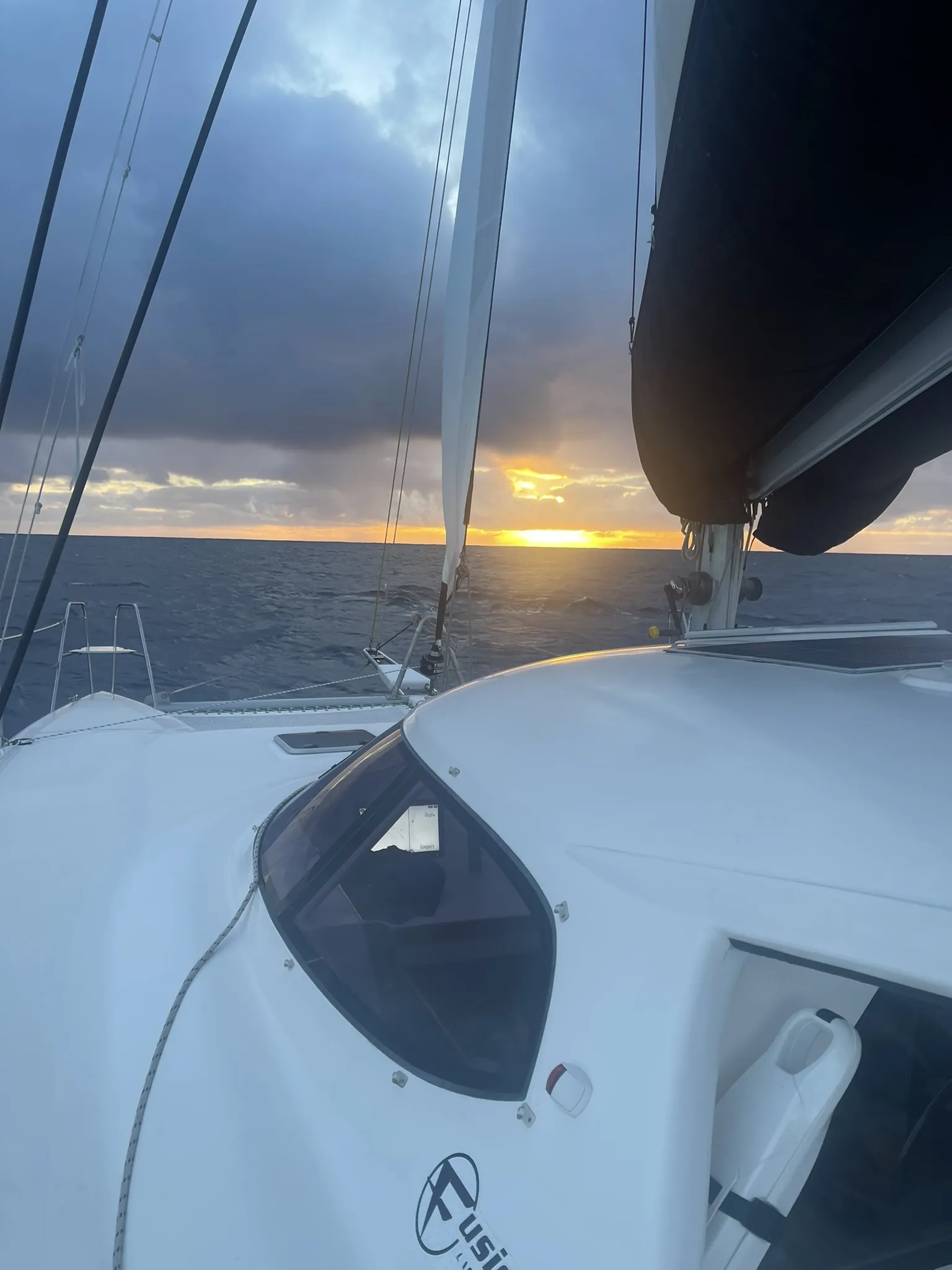
Keep reading: if you want to stand some of those watches yourself, we take crew on the Fiji to New Zealand passage; the passage itself is planned out in the Fiji to New Zealand passage guide; the sail plan the on-watch person is working to is in the reefing slider; and the night-four problem in prose is one of the four things that stop people leaving. Or meet the boat herself — Mā Tori, our Fusion 40 catamaran for sale.