
On the night of Monday 7 September Hurricane Lowell passed about 40 miles west of Niʻihau as a Category 2, and a gust of 87 mph, about 76 knots, was recorded at Nawiliwili on Kauaʻi. The next morning the Kauaʻi Sea Scouts' 63 ft yacht Sun Seeker was on the bottom in her own slip. The crew had done what every checklist says about preparing a boat for a cyclone in a marina. Lines doubled, everything tied down, ports closed, extra fenders out. She sank anyway, because the part that failed was not on the boat. Plenty of boats in Fiji and Queensland make the same bet on a marina berth every November, so this one is about what the berth is made of.
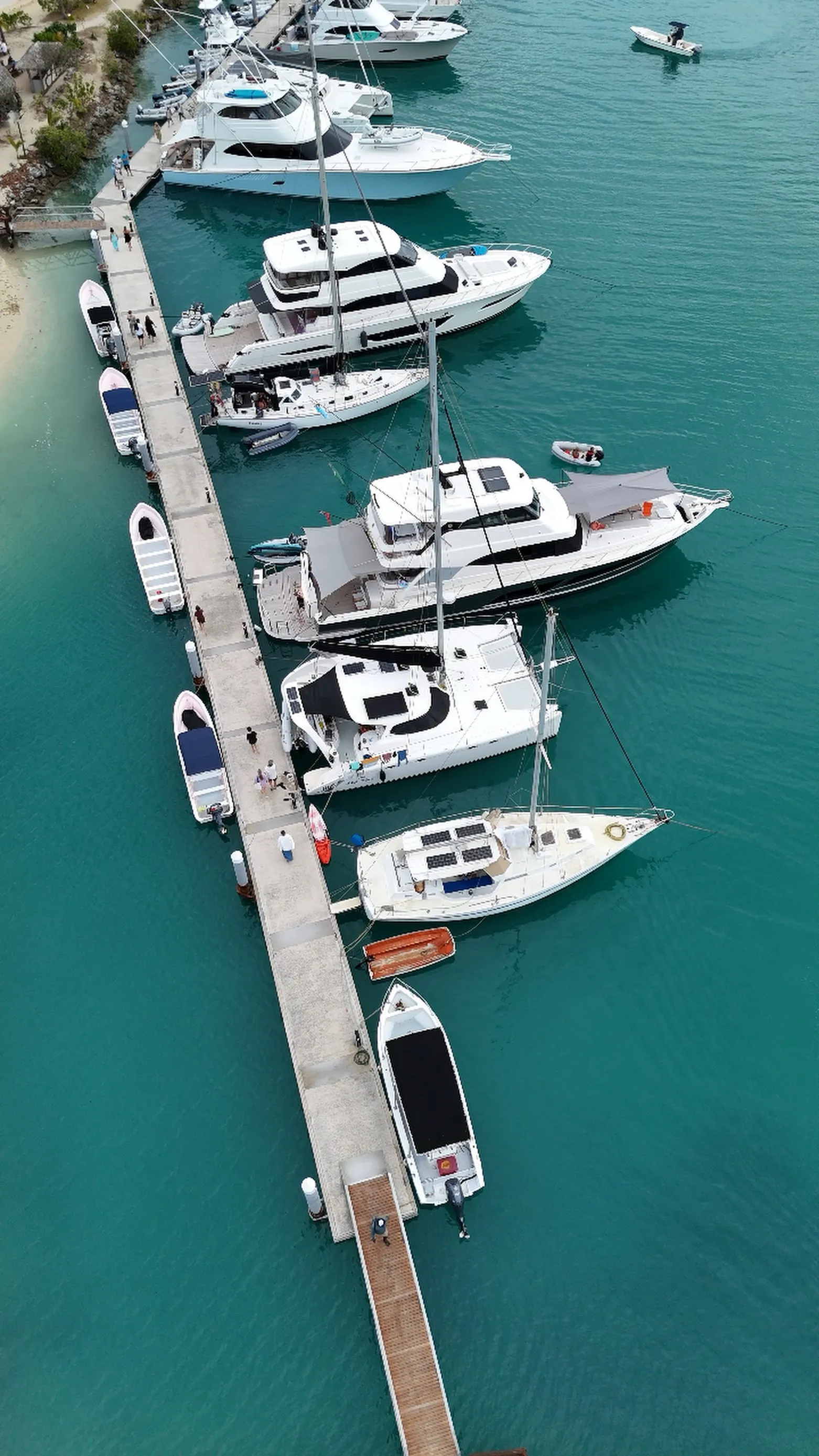
What happened at Nawiliwili
What the reports say:
- Sun Seeker was donated to the Kauaʻi Sea Scouts earlier in 2026 and valued at US$500,000. Kauaʻi Now has her at 63 ft. Other reports say 61 and 65.
- Lowell's centre passed about 40 miles west of Niʻihau late on 7 September local time. Around 90 percent of Kauaʻi lost power.
- Tom Worthen of the Sea Scouts told Kauaʻi Now: "We doubled the lines holding the boat down, secured everything we could by tying it down, closed all the portholes, put out extra fenders."
- The storm surge broke the port side cleat on the dock. The boat moved backward and slammed her stern into the dock, which put a hole in the hull.
- Worthen again: "We have bilge pumps, but they can't keep up with a hole that big, and she filled with water and sank in our slip."
- The Sea Scouts are working with their insurer to have her raised.
The full report is on Kauaʻi Now.
What we don't know: whether the dock was fixed or floating, how old that cleat was or how it was fastened, how high the surge got in the harbour, how many points each side of the boat was tied to, or whether hauling a boat that size on Kauaʻi at short notice was even possible. So this is not a judgement on that crew. They did the list. The list is what we are looking at.
The weak point was on the dock
Every checklist we have read is about the boat's side of the line. But a dock line is a chain of parts and the rope is only one of them. There is the cleat on the boat and what it is bolted through, the line, the spot where the line rubs, the cleat on the dock, the fastenings under that cleat, the dock itself, and the piles holding the dock. Doubling the lines onto the same dock cleat doubles the rope and nothing else.
A dock cleat is put there for a boat lying quietly alongside. In a surge the boat rises and the pull comes upward as well as sideways,. BoatUS has been collecting hurricane claims for decades and their guide to preparing boats and marinas for hurricanes has a few numbers that stick:
- As many as 50 percent of the boats damaged at fixed docks could have been saved by better dock lines.
- Storm dock lines should be at least as long as the boat, so she can rise with the water.
- Piles on a floating dock that stand only 6 or 7 ft above normal high tide probably won't be safe. One Virginia marina replaced 6 ft piles with 18 ft ones and every boat came through a 14 ft surge.
So before you double anything, walk the dock with a torch and look at what you are tying to:
- How the cleats are fastened. Through-bolted with a plate underneath, or screwed into timber from the top. If you can't see, ask the marina.
- One line, one strong point. The second bow line goes to a different cleat or round a pile. Two lines on one cleat is one point of failure.
- Long lines across the berth. Lines to the far side of the slip or to the next finger are longer, stretch more, and let the boat lift without the angle going vertical.
- Pile height against the forecast surge. If the surge floats the dock off the top of the piles, the lines are tied to a raft.
- Who is upwind of you. The boat next door with a furled headsail and old lines is part of your plan.
Marina berth, cyclone pit or hauling out
The BoatUS guide cites an MIT study that found boats stored ashore were far less likely to be wrecked than boats left in the water. That matches what we hear on the dock in Fiji every October. In the water, surge is the killer. Ashore, it is mostly wind, and wind on a strapped-down boat is a smaller problem than a rising dock.
In Fiji the question usually comes down to Vuda. Vuda Marina lists eighty cyclone pits for the season, 1 November to 30 April, where the keel sits in a hole taking the weight and the hull rests on tyres at ground level. They say the pits generally sell out before the end of July. Those are for monohulls. Catamarans and trimarans are hauled out and strapped down with what Vuda calls a ten-point system of concrete anchor points and heavy-duty ratchet straps.
For a cat that makes it a choice between strapped down ashore and tied up afloat. Ashore, ask what the straps are anchored to, because a boat on stands with nothing holding her to the ground is not the same thing. Afloat, you are back to the dock walk above. The other options are in our South Pacific cyclone season plan.
Chafe gear, and what the line is made of
BoatUS is flat about it: chafe protectors are essential on all lines, at a dock, on a mooring or at anchor.
The part most people miss is heat. Nylon is what you want in a dock line because it stretches and takes the snatch out. BoatUS reports MIT tests where nylon under heavy cycling loads failed from the inside, the fibres heating up and melting against each other with no fuzz on the outside to warn you. Their write-up suggests a hose over the line can make it worse by keeping the rope dry and hot, and that polyester stands up to chafe better than nylon when wet. What comes out of that:
- Fabric chafe sleeves that let water through, not a length of garden hose.
- Polyester from the deck cleat through the chock, where the rubbing is, joined to nylon for the long run to the dock, where the stretch is.
- Chafe gear at every point a line touches the boat, the dock or another line. Tie it on so it can't walk down the rope.
- Windage off. Sails off the boat, not furled. Bimini, covers and anything else canvas below.
The insurance clause
Your policy decides more of this than you do. Most cruising policies define a cyclone area and dates, and either want you out of it or want the boat secured in a way they have agreed to. One public example: Pantaenius Australia says it will cover a boat in a Queensland marina through cyclone season for roughly 10 percent more premium a year, provided the owner completes and complies with its Named Tropical Storm Contingency Plan. It won't cover boats kept permanently on swing moorings north of Gladstone.
The word that matters is "complies". If the plan you signed says sails off and lines doubled to separate points and the assessor finds a furled genoa in ribbons, you have handed them a reason. Do every line of the plan, photograph it with the date on, and send the photos before the storm.
Policies differ and they change at renewal. Read your own current wording and get anything unclear confirmed in writing by the insurer.
What we do, and what we haven't done
We take Mā Tori south to New Zealand every season and have done four years running. We have not ridden out a cyclone in a marina berth and we won't pretend otherwise. In a berth, the strength of the whole set-up belongs to someone else, and that is part of why we go. The passage is in the Fiji to New Zealand guide.
If she had to stay in the tropics for a season, this is the order we would work in:
- Ashore and strapped down first. Booked months ahead, with the anchor points seen in person.
- If afloat, the dock walk before the berth is paid for. Cleat fastenings, pile height, the neighbours.
- Every line to its own strong point. Long, with fabric chafe gear at each chock. A cat has four bow and stern cleats and two midship ones to spread the load across, which is a help, and a lot of windage, which is not.
- Everything canvas off the boat.
- The insurer's plan done to the letter and photographed.
- Seacocks shut, batteries charged, bilge pumps tested. Knowing a pump won't keep up with a holed hull. It deals with rain and a weeping fitting.
- Off the boat. BoatUS calls staying aboard one of the most dangerous mistakes a skipper can make.
Warnings, marina rules and policy terms change every season. Check the current Fiji Meteorological Service or Bureau of Meteorology warnings, the marina's own cyclone plan and your insurer's wording before relying on any of this.
Questions people ask about cyclones and marinas
Is a boat safer in a marina or hauled out in a cyclone?
Hauled out and tied down, in most cases. BoatUS cites an MIT study that found boats stored ashore were far less likely to be wrecked than boats stored in the water. Ask the yard how boats are secured.
Is doubling the dock lines enough for a cyclone?
Not if both lines go to the same cleat. Sun Seeker had doubled lines on and sank after a cleat on the dock broke. Each line to a separate strong point.
Should you stay on your boat during a cyclone?
No. Do the preparation early, photograph it for the insurer and leave before the wind arrives.
Can a catamaran go in a cyclone pit at Vuda?
The pits are for monohulls. Vuda says cats and tris are hauled out and strapped to concrete anchor points with ratchet straps. Check the marina's current terms and booking dates.
Keep reading: where the fleet goes and why is in the cyclone season plan, the Cat 1 side of taking a boat south is in the New Zealand buying guide, the survey checklist is in the Catamaran Buyer's Pack, and our bluewater catamaran for sale is the boat this was written from.